News
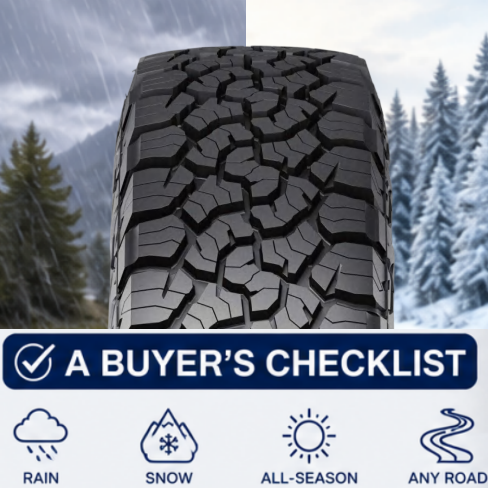
After two decades in the tire business, choosing an all weather tire doesn’t have to be complicated – if you know what your vehicle actually needs. Here’s the checklist before you buy.
Start with Your Vehicle Type
Your vehicle dictates the foundation of your search. Passenger cars typically need tires in the 15- to 18-inch range with a focus on ride comfort. Crossovers and SUVs demand higher load capacities and more aggressive tread patterns. The best all weather tire for SUV applications will carry a higher load index and a stiffer sidewall to handle the extra weight.
Never ignore load capacity and tire size. Check your door jamb placard for the original equipment specifications. Deviating from those numbers – especially the load index – can compromise handling and safety. Start with the facts printed on your car, then match a tire that meets or exceeds them.
Evaluate Your Driving Conditions
An all weather tire is only worth the investment if your driving habits actually demand it. Ask yourself:
▪Do you face heavy rain and wet roads for months at a time?
▪Do you see occasional snow and cold weather, but not enough to justify dedicated winter tires?
▪Do you venture onto gravel or dirt roads on weekends?
▪Are long highway commutes part of your daily routine?
If you answered yes to at least two of those, an all weather tire is your sweet spot. Unlike standard all-season tires, true all weather options carry the 3PMSF (Three-Peak Mountain Snowflake) symbol, meaning they’ve passed the ASTM F1805 snow traction test and deliver at least 10% better grip on medium-packed snow than a reference all-season tire.
Understanding Tire Sidewall Information
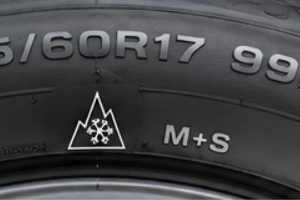
The sidewall is the tire’s resume. Learn to read it, and you’ll never buy the wrong tire again.
Tire size markings like 225/60R17 tell you the width in millimeters (225), the aspect ratio (60), the construction type (R for radial), and the rim diameter in inches (17).
Load index and speed rating come next. The load index indicates how much weight each tire can support. The speed rating – denoted by a letter like H, V, or W – tells you the maximum sustained speed the tire can handle. For everyday driving, an H-rated tire (130 mph) is more than sufficient, but if you tow or haul heavy loads, prioritize a higher load index.
Finally, look for the 3PMSF snowflake symbol. This is the dividing line between a standard all-season tire and a true all weather tire. Standards set by organizations like the European Tyre and Rim Technical Organisation (ETRTO) ensure that tires carrying this symbol meet rigorous interchangeability and performance benchmarks across international markets.
Why Tread Design Should Match Your Lifestyle
Tread patterns aren’t just for looks. Urban drivers should look for a tread that minimizes road noise and maximizes wet grip. If your weekends involve light off-roading, you’ll need a design with more open grooves and biting edges.
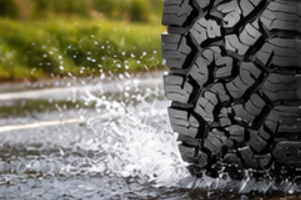
Wet weather safety should be non-negotiable for anyone living in a rainy climate. The Landpioneer B61 was engineered with this exact balance in mind – its tread design channels water efficiently while maintaining solid contact with the road. If you want to understand the engineering behind why that matters, read our deep dive on How Tread Design Impacts Traction in All Weather Tires. The article breaks down siping, groove geometry, and compound interaction in plain English.
Final Buyer Checklist Before Purchasing
Before you buy, run through this list:
▪Confirm size compatibility – Double-check the tire size, load index, and speed rating against your vehicle’s placard.
▪Prioritize safety over appearance – Aggressive tread looks great, but if you never leave the highway, you’re sacrificing fuel economy and noise comfort for nothing.
▪Consider long-term ownership costs – A cheaper tire that wears faster or delivers poor wet grip will cost you more over three years than a quality set upfront.
Explore More About the B61
The Landpioneer B61 was built for drivers who refuse to compromise. Its tread design technology combines dense siping for winter bite with continuous center ribs for highway stability. That dual personality is what separates a genuine all weather tire from a rebranded all-season.
Wet grip and water evacuation are equally critical. The B61’s circumferential grooves are sized and angled to move water away from the contact patch at highway speeds, reducing the risk of hydroplaning during sudden summer downpours. When you pair that with the cold-weather flexibility of its compound, you get a tire that genuinely earns its 3PMSF certification.
##Conclusion: A Smarter Way to Drive Through Every Season
Choosing the right all weather tire comes down to three things: knowing your vehicle, understanding your environment, and reading the sidewall like a pro. Don’t get distracted by brand hype or aggressive tread aesthetics. Focus on the numbers – the load index, the speed rating, and that small snowflake symbol that proves the tire can handle more than just dry pavement.
If you do your homework, you’ll end up with a tire that saves you money, garage space, and peace of mind. And after twenty years of mounting rubber, I can tell you: peace of mind is the one spec you can’t put a price on.