News
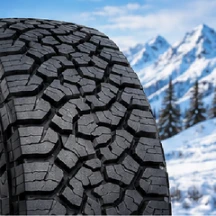
All weather tires can provide useful traction in light to moderate snow, but icy roads remain a greater challenge. For drivers considering the Landpioneer B61, understanding tread design, rubber compounds, and winter performance limits is essential before choosing one tire for year-round driving.
Actual performance depends on the tire’s specifications, certification, inflation pressure, vehicle weight, driving style, and road conditions. No tire can eliminate the risks of severe winter weather.
How All Weather Tires Grip Snow
Snow traction depends on several design features working together.
Tread Blocks, Sipes, and Void Ratio
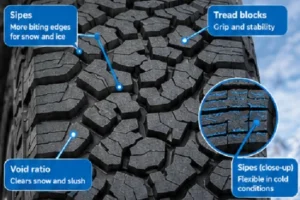
Tread blocks help a tire gain traction by interacting with snow on the road. Their shape, arrangement, and stiffness influence acceleration, braking, and cornering. Snow packed into tread grooves can also help the tire generate traction on snow-covered surfaces.
Sipes are small cuts in the tread blocks. They create additional biting edges and allow local movement within the tread, helping the tire maintain contact with uneven, slippery surfaces.
Void ratio refers to the proportion of open space within the tread pattern. Adequate grooves help clear snow, slush, and water from the contact area. However, more open space is not automatically better; the balance between voids and tread-block stiffness also matters.
For a closer look at these design factors, read our guide to How Tread Design Impacts Traction in All Weather Tires.
Why Rubber Compounds Matter
Rubber flexibility is another important factor. As temperatures fall, some tire compounds become less flexible, potentially reducing grip. All-weather tires are designed to balance cold-weather capability with usability in warmer conditions, while dedicated winter tires are specifically developed for sustained cold.
How All Weather Tires Perform on Ice
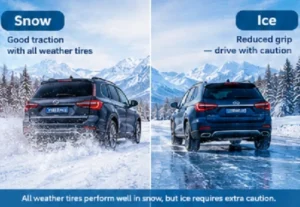
Ice presents a different challenge from snow. Its smooth surface offers limited mechanical grip, and a thin layer of water can further reduce friction under some conditions.
All-weather tires can provide useful control on occasional icy roads, but their performance varies by model and conditions. Drivers should reduce speed, increase following distance, avoid sudden steering inputs, and brake gently.
When ice is frequent rather than occasional, a dedicated winter tire is usually the more prudent choice.
For practical guidance, consult the NHTSA’s official winter-driving recommendations.
Landpioneer B61 Winter Design Breakdown
The Landpioneer B61 is positioned as an all-weather tire for drivers seeking year-round usability. Its suitability for winter driving should be assessed through its actual specifications and verified performance ratings rather than appearance alone.
Tread Pattern and Siping
The supplied B61 tread image shows substantial tread blocks separated by open grooves. This type of pattern provides the structural features used to manage contact with the road and help clear loose material.
However, a tread photograph alone cannot establish snow-braking performance, ice grip, or the effectiveness of a tire’s siping. These characteristics depend on the complete design and should be confirmed through appropriate testing.
Snow and Water Evacuation
Grooves help move water and slush away from the contact area, while tread edges contribute to traction on snow. Their effectiveness depends on tread geometry, remaining tread depth, speed, and road conditions.
Check 3PMSF and M+S Markings
The Three-Peak Mountain Snowflake (3PMSF) symbol indicates that a tire has met defined snow-grip requirements under the applicable test procedure. M+S is a different marking and should not automatically be treated as equivalent evidence of certified severe-snow performance.
For the B61, check the exact tire size, sidewall markings, and manufacturer documentation before claiming 3PMSF certification. The [United Nations Economic Commission for Europe (UNECE) UN Regulation No. 117] provides the relevant regulatory framework for applicable tire performance requirements.
B61 vs Dedicated Winter Tires
The following table describes typical differences between the two tire categories, not independently verified comparative test results for the B61.
| Feature | Landpioneer B61 All-Weather Tire | Dedicated Winter Tire |
| Snow traction | Depends on specifications and conditions | Generally strong when properly selected |
| Snow braking | Model-dependent | Usually optimized for winter conditions |
| Ice braking | Limited by available grip | Generally better, depending on design |
| Noise | Depends on tread and vehicle | Varies by model |
| Wear | Designed for year-round use | Warm-weather use can accelerate wear |
| Year-round use | Intended for all-season operation | Generally best used in cold conditions |
The key distinction is versatility versus specialization. The B61 offers a practical year-round approach, while a dedicated winter tire prioritizes performance in sustained cold and demanding winter conditions.
Winter Driving Tips for All Weather Tires
Check Tire Pressure and Tread Depth
Cold temperatures can reduce inflation pressure. Check pressure when the tires are cold and follow the vehicle manufacturer’s recommended settings. Inspect tread depth, uneven wear, cuts, and sidewall damage before winter trips.
Drive Smoothly
Accelerate gradually, brake early, and leave more space between vehicles. Avoid cruise control on slippery roads where maintaining traction requires frequent speed adjustments.
Carry Chains When Appropriate
Snow chains may be required or recommended on certain routes. Check local regulations, vehicle compatibility, and the owner’s manual before use. Chains are not suitable for every tire or vehicle.
Inspect Before Long Trips
Check all four tires, the spare if equipped, and the vehicle’s winter equipment. Review weather forecasts and avoid unnecessary travel during severe ice or snow warnings.
When Should You Switch to Winter Tires?
Consider dedicated winter tires if you regularly drive on icy roads, travel through mountainous areas, experience prolonged sub-zero temperatures, or need to meet local winter-equipment laws.
Frequently Asked Questions
Are all weather tires good in snow?
Many all-weather tires perform well in light to moderate snow, particularly when they carry the 3PMSF marking. Actual results depend on the model, tread condition, vehicle, and driving conditions.
Are all weather tires good on ice?
They can provide some grip, but ice remains a major limitation. Dedicated winter tires generally offer better performance in sustained icy conditions.
Does Landpioneer B61 have 3PMSF certification?
Confirm the marking on the exact B61 tire size and check the manufacturer’s documentation. Do not assume every size or version has the same certification.
Do I need chains with all-weather tires?
Not always. Requirements depend on local law, road conditions, and vehicle compatibility. Some mountain routes require chains even when winter-capable tires are fitted.
Can I use B61 throughout winter?
The B61 is intended for year-round use, but suitability depends on the winter conditions in your area. For frequent ice or severe winter driving, a dedicated winter tire may be the safer option.
Conclusion
The Landpioneer B61 offers an all-weather approach for drivers who want one tire for changing conditions throughout the year. All-weather tires can handle many snowy situations, but ice demands greater caution and may justify dedicated winter tires.