News

All weather tires are designed to help drivers stay confident when weather conditions suddenly change, and rain is one of the most common challenges faced on everyday roads. Whether you are commuting to work, taking a family road trip, or driving on the highway during a storm, tire performance on wet surfaces plays a major role in vehicle safety.
The Landpioneer B61 was developed to provide balanced year-round performance, with a strong focus on wet traction and water evacuation. Through its tread design, groove structure, and advanced rubber compound, the B61 helps drivers maintain control when roads become slippery.
Why Wet Roads Are More Dangerous Than Most Drivers Think
Understanding Hydroplaning
Hydroplaning occurs when a layer of water builds between the tire and the road surface. Instead of maintaining direct contact with the pavement, the tire begins to ride on top of the water.
When this happens, steering response decreases dramatically and braking distances increase. In severe situations, drivers may temporarily lose control of the vehicle.
Even a shallow layer of water can create hydroplaning risks if the tire cannot evacuate water efficiently.
Why Water Film Reduces Tire Grip
Tire grip depends on friction between the tread and the road surface. Water acts as a barrier that reduces this contact.
As speed increases, the challenge becomes greater because the tire has less time to push water away from the contact patch.
This is why tread design is just as important as tire compound when driving in wet weather.
The Water Evacuation Design Behind the B61
Wide Longitudinal Grooves
The B61 features wide longitudinal grooves that help move water away from the center of the tire.
These channels work like drainage paths, reducing water buildup and helping the tread maintain contact with the road.
Open Shoulder Channels
The shoulder area includes open channels that allow water to exit quickly from the tread pattern.
This design improves drainage efficiency during heavy rain and supports stable handling during lane changes and cornering.
3D Sipes and Micro-Grip Technology
Numerous sipes create additional biting edges across the tread blocks.
These small grooves improve grip on wet surfaces by increasing the number of contact points available during braking and acceleration.
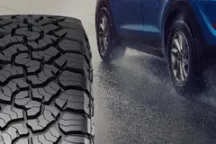
Real Wet Driving Performance
Wet Braking Stability
One of the most important measures of wet-weather safety is braking performance.
When the road is wet, tires must maintain sufficient grip to convert braking force into stopping power. The B61’s combination of siping and water evacuation channels helps improve contact with the road surface, supporting more predictable braking behavior.
Drivers often notice that vehicles equipped with modern all weather tires feel more stable when sudden braking is required during rainy conditions.
Cornering Confidence in Rain
Cornering places additional stress on tire contact patches because both steering and traction forces are working simultaneously.
The reinforced shoulder design of the B61 helps maintain stability when turning on wet roads. This allows drivers to feel more confident when entering highway ramps, roundabouts, and urban intersections.
Performance During Heavy Downpours
Heavy rain creates larger volumes of standing water, increasing hydroplaning risks.
The B61’s open groove architecture continuously channels water away from the tread surface, helping maintain road contact even when rainfall becomes intense.
Although no tire can completely eliminate hydroplaning, effective drainage significantly improves safety margins.

Why Tire Compound Also Matters in Wet Conditions
Flexible Rubber at Lower Temperatures
Many drivers focus only on tread patterns, but tire compounds are equally important.
A tire that becomes too hard in cool temperatures may lose grip, even if the tread design is excellent.
The B61 uses an all weather compound engineered to remain flexible across a wider temperature range. This flexibility helps the tread conform to road surface irregularities and maintain traction when temperatures drop during rainy seasons.
For a deeper understanding of how compounds influence performance, see our related guide: Rubber Compounds in All Weather Tires.
For additional information about hydroplaning and wet-weather driving safety, drivers can also consult resources from the [National Highway Traffic Safety Administration (NHTSA)](https://www.nhtsa.gov?utm_source).
Conclusion
Rainy conditions challenge every tire, but the B61 is designed specifically to address the key causes of wet-weather instability. Its wide grooves, open shoulder channels, and extensive siping work together to evacuate water and maintain traction.